No Filter, No Regrets: The Real Talk Every Aspiring Adult Creator Needs to Hear Before Hitting Publish
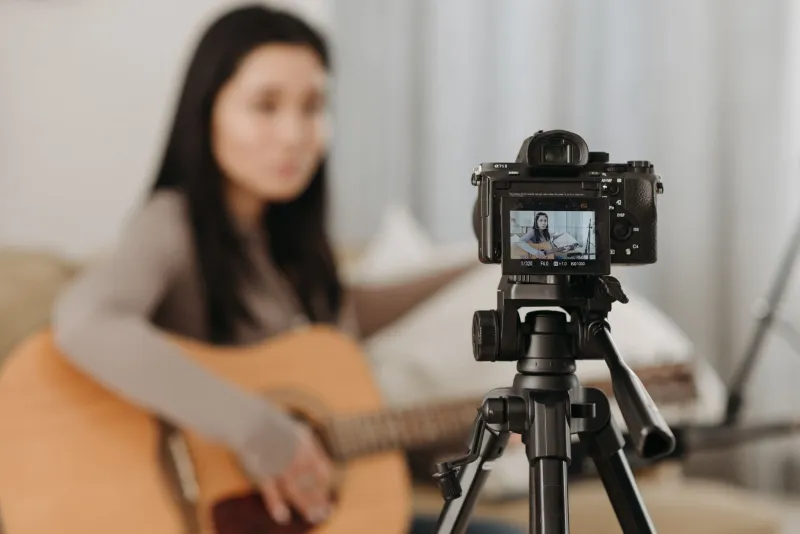
Every week, thousands of Americans decide to take the leap into adult content creation. Some are motivated by financial freedom. Some are chasing creative autonomy. Some are just genuinely sex-positive people who figure, hey, why not get paid to do something they enjoy? The fantasy of building a thriving, self-directed career in adult entertainment is more accessible than ever — the platforms exist, the audience is there, and the stigma, while not gone, has shifted enough that it's no longer the career-ending nuclear option it once was.
But here's what the highlight reels don't show you: the learning curve is steep, the mistakes are expensive, and the emotional labor is real. We talked to established creators across the adult content space — including performers who've built audiences here on Gimps Gone Wild — to compile the advice they wish someone had handed them before they ever hit that upload button.
Your Brand Is a Business, Not Just a Vibe
The single biggest mindset shift that separates creators who last from those who burn out fast? Treating this like a business from day one.
"I spent my first eight months just... posting," says Cassie V., a content creator based in Las Vegas who's been in the industry for four years. "No strategy, no consistency, no real sense of who I was trying to reach. I was just throwing stuff at the wall. When I finally sat down and actually thought about my brand — what made me different, who my audience was, what I was actually selling — everything changed."
Personal branding in the adult space operates on the same fundamental principles as any other creator economy vertical, with a few significant twists. Your persona needs to be specific enough to attract a dedicated audience but flexible enough to evolve as you do. Think about what genuinely distinguishes you — your aesthetic, your personality, your particular niche within the broader adult content landscape — and build from there.
This isn't about being fake. The creators with the most loyal followings are almost universally the ones whose public persona is a genuine (if curated) extension of who they actually are. Authenticity, even in a highly stylized context, is what converts casual viewers into paying subscribers.
Privacy Is Infrastructure, Not an Afterthought
If there's one area where new creators consistently underestimate the stakes, it's privacy. The decisions you make in your first weeks — about your name, your location, what background details appear in your content — are decisions you'll live with for a long time.
Veteran performer and content entrepreneur Devon R., who operates out of the Pacific Northwest, learned this the hard way early in his career. "I was sloppy about it at the beginning because I didn't think it mattered yet," he says. "I hadn't built an audience, so I figured there was nothing to protect. That's completely backwards. You build your privacy infrastructure before you need it, not after."
Practical steps that the creators we spoke with consistently recommended:
- Use a stage name from the very beginning. Not just a different first name — a fully separate identity with its own email address, payment accounts, and social media presence.
- Scrub metadata from your photos and videos. Most smartphones embed location data in image files by default. Turn this off and use a metadata removal tool before posting anything.
- Be deliberate about what's visible in your content. Distinctive tattoos, recognizable backgrounds, visible mail or packages, neighborhood landmarks — all of these can be used to identify your real-world location.
- Separate your financial life. Use a dedicated bank account and payment processor for creator income. This isn't just privacy — it's also cleaner for taxes, which, yes, you absolutely need to be paying.
Building Income Streams That Actually Sustain You
The adult content economy has diversified significantly over the last five years, and the creators making real money are almost never relying on a single platform or revenue source.
Subscription income is the foundation for most, but the smart operators layer on top of it: custom content requests (often the highest per-hour income in the business), merchandise, paid direct messaging, tipping features, and increasingly, licensed content deals with established platforms and sites.
Cassie V. breaks down her current income structure without hesitation: "Subscriptions are probably forty percent of what I make. Custom content is another thirty. The rest is a mix of tips, affiliate deals, and licensing. If any one of those dried up tomorrow, I'd be fine. That took two years to build, but it's the reason I'm still doing this."
The diversification imperative isn't just about income stability — it's also about platform risk. Adult content creators are uniquely vulnerable to sudden policy changes, deplatforming, and payment processor restrictions. Creators who built their entire business on a single platform have been wiped out overnight when that platform changed its terms of service. Redundancy isn't paranoia; it's professionalism.
The Mental Health Piece Nobody Wants to Talk About
Here's the part of the conversation that tends to get glossed over in the breathless coverage of creator economy success stories: this work has a psychological weight that you need to actively manage.
Public-facing adult work means absorbing a constant stream of attention — some of it deeply affirming, some of it aggressively hostile, and a lot of it just... weird. Learning to process all of that without letting it define your sense of self is genuinely difficult, and it's a skill that takes time to develop.
"The comments don't bother me the way they used to, but that's because I did a lot of work," says Devon R. "Therapy, honestly. A lot of therapy. And building a real life outside of the work — friends who have nothing to do with the industry, hobbies that are just mine, spaces where I'm not 'Devon' at all. That separation is what keeps me sane."
Multiple creators mentioned the importance of community — connecting with other people in the industry who understand the specific pressures of this work. Professional organizations, private online communities, and informal networks of peers provide both practical support and the kind of "you're not alone in this" validation that's hard to find anywhere else.
Boundaries, both digital and interpersonal, came up in virtually every conversation. Deciding in advance what you will and won't do — and communicating those limits clearly and consistently — isn't just about safety. It's about preserving the sense of agency and control that drew most creators to this work in the first place.
The Creators Who Last
After all the conversations, a pattern emerged pretty clearly. The adult content creators who build sustainable, satisfying careers share a few key traits: they think strategically, they protect themselves proactively, they diversify relentlessly, and they invest in their own mental and emotional wellbeing with the same seriousness they bring to their content.
The ones who flame out, conversely, tend to skip the infrastructure in pursuit of the income — and end up with neither.
"Go in with your eyes open," Cassie V. says simply. "It's a real job. It can be an amazing job. But it's a job. Treat it like one from the start, and you'll be miles ahead of where I was."
Consider this your head start.